
The 10 m² no-consent rule (Schedule 1)
Schedule 1 of the New Zealand Building Act 2004 exempts certain small building works from building consent: single-storey detached buildings with floor area not exceeding 10 m² and height not exceeding 3 m, used for purposes such as a garden shed, tool shed, or small detached structure.
The catch: the exemption typically excludes buildings used for sleeping or with plumbing connections. Councils also interpret it differently - some accept under-10 m² cabins used as sleepouts without consent, others require consent for any sleeping use.
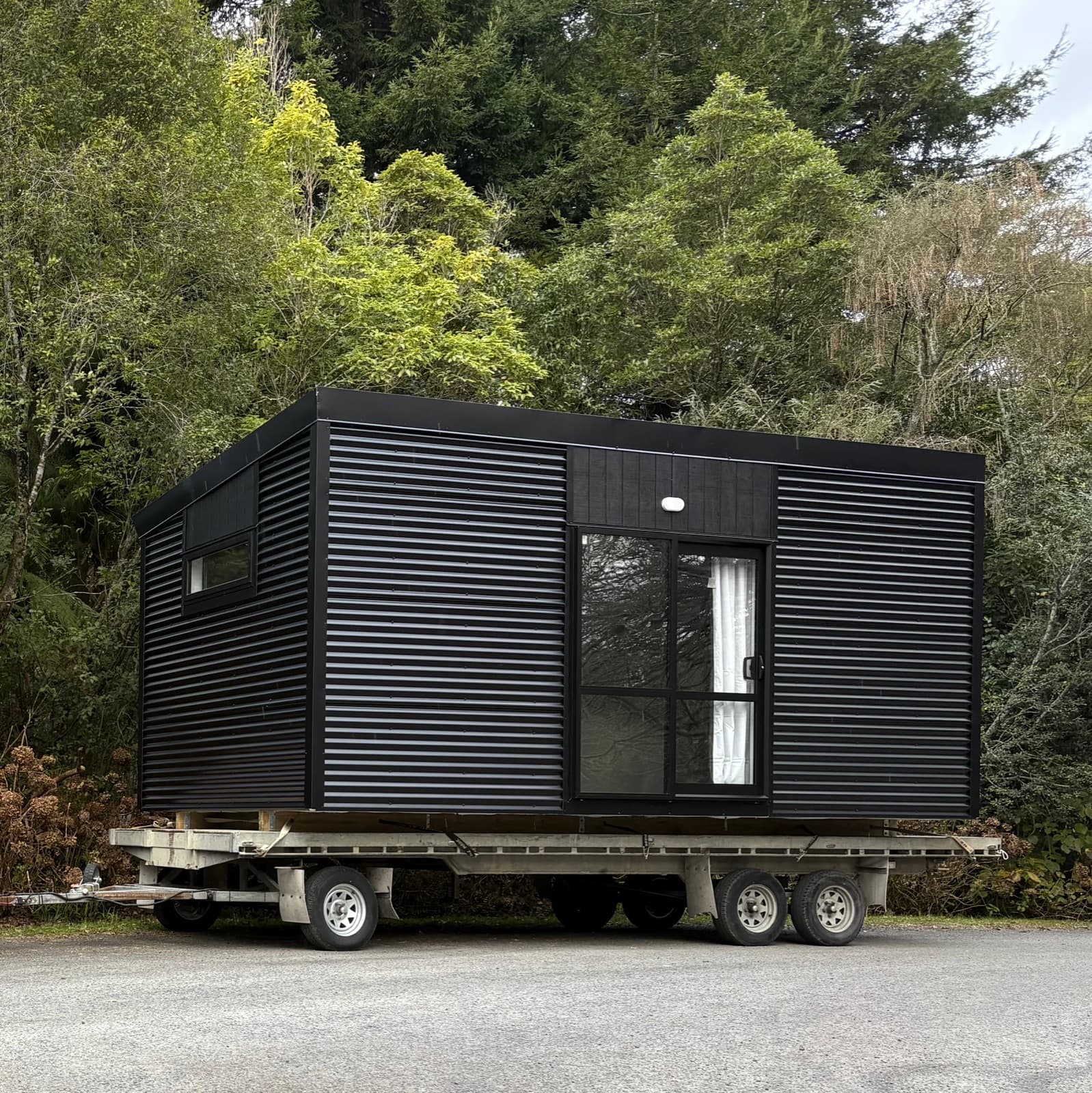
Our smallest cabin (4.5×3 at 13.5 m²) sits above that 10 m² threshold, so it usually needs building consent. The process is straightforward for a single-room cabin without plumbing - we provide the structural sign-off as part of the build documentation, and most consents come through in 6–10 weeks.
When you definitely need consent
Building consent is almost always required when:
- Floor area exceeds 10 m²
- Height exceeds 3 m
- Used as a permanent or semi-permanent dwelling
- Wired for fixed electrical supply (some councils)
- Located in specific environmental zones (e.g. flood-prone, character zones)
What the consent process looks like
For a cabin or small tiny home that needs consent (studio, minor dwelling, granny flat), the typical process is:
- Pre-application discussion with your council (often free)
- Build documents: site plan, floor plan, structural sign-off (we provide for standard sizes), services plans
- Application submitted with council fee ($1,500–5,000)
- Council review (typically 20 working days)
- Build proceeds; council inspections at key stages
- Final code compliance certificate
How we help
We provide the build documentation - structural sign-offs, floor plans, elevations, services rough-in - that you'll need to attach to your council application. We don't lodge the consent on your behalf (that's owner / council direct), but we make the documentation side of it as straightforward as possible. Our team has walked through the consent path with hundreds of customers and can advise on what your specific council typically asks for.