
What counts as a minor dwelling
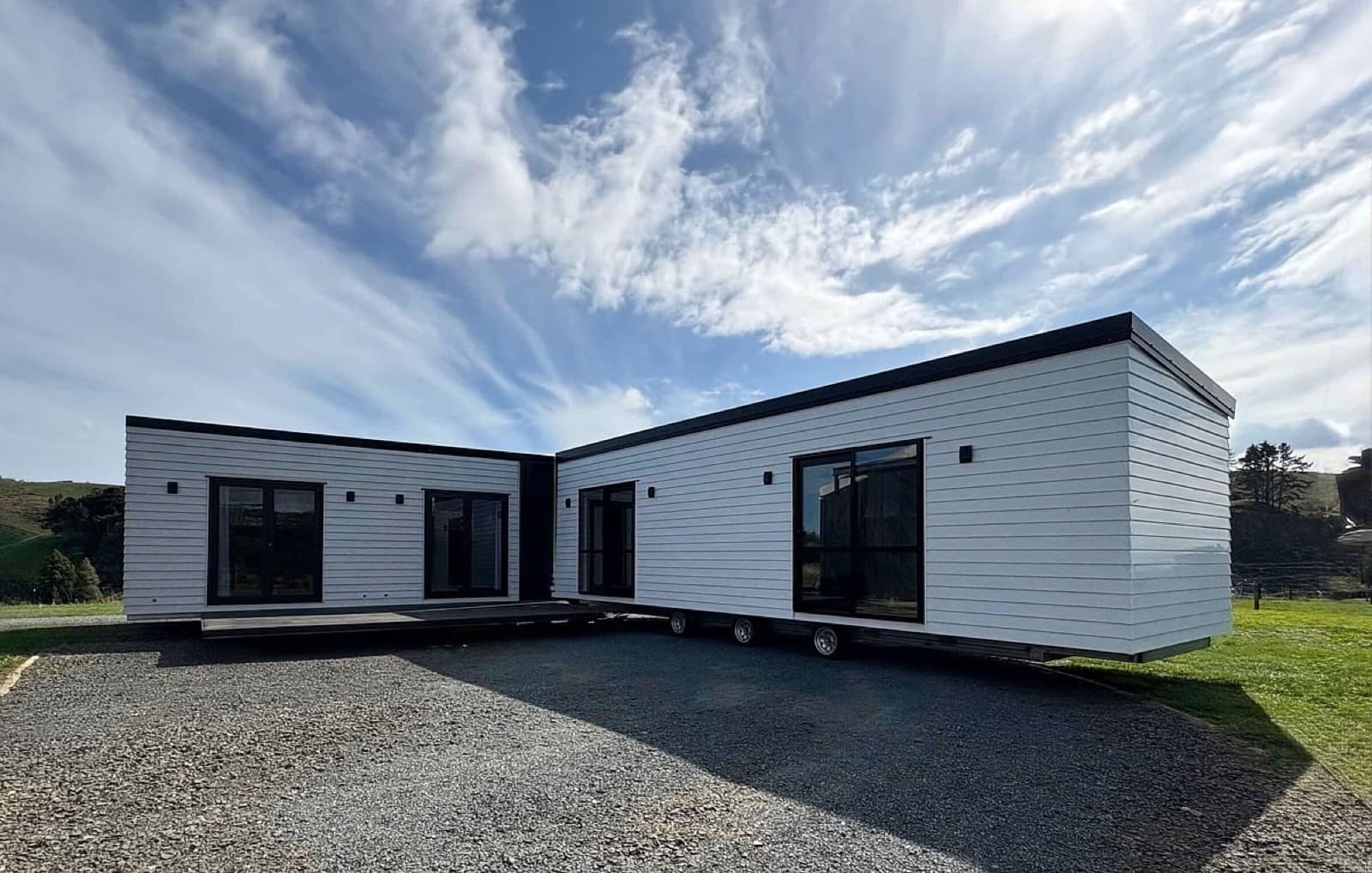
A minor dwelling is a self-contained second dwelling on a property - typically with its own kitchen, bathroom, bedroom, separate entry, and (sometimes) separate parking. It's distinct from a sleepout or studio (which doesn't have its own kitchen / bathroom) and from a primary dwelling (the main house on the property).
Most councils set a maximum floor area for minor dwellings - typically 60–80 m². Our 10×3 (30 m²) and 12×3 (36 m²) tiny home builds sit well under that limit.
The consent path
A minor dwelling almost always requires building consent because it has plumbing and sleeping accommodation. The consent process typically covers:
- Site plan showing the dwelling's position
- Floor plan + elevations of the build
- Structural engineer's sign-off (we provide for our standard sizes)
- Plumbing + drainage plan
- Council application fee ($1,500–5,000 typically)
Council-by-council variation
Auckland Council has an explicit 60 m² minor dwelling rule that exempts compliant builds from full resource consent in many residential zones - faster and cheaper path. Other councils have their own rules: Hamilton and Waikato District have a similar minor dwelling pathway; Wellington, Hutt, and Porirua have wind-zone engineering requirements; rural councils tend to be more relaxed but still require building consent.
Common questions councils ask
When you submit a minor dwelling consent, councils typically scrutinise:
- Floor area and footprint (under the council's minor dwelling limit?)
- Parking (is there a separate park for the minor dwelling?)
- Services (is there capacity in the existing power, water, sewer)?
- Setbacks (is it the right distance from boundaries?)
- Height (typically capped at single-storey or one-and-a-half storey)