One of the biggest advantages of a transportable home is that it arrives on your site largely complete. Instead of watching a house get built over 18 months, you watch a finished home land on the day, ready to be connected. But delivery is a piece of the process a lot of buyers underestimate until it is almost happening.
This guide covers how transportable home delivery works in NZ, what site prep you need to do, how delivery is priced, and how to plan for delivery day.
How Delivery Actually Works
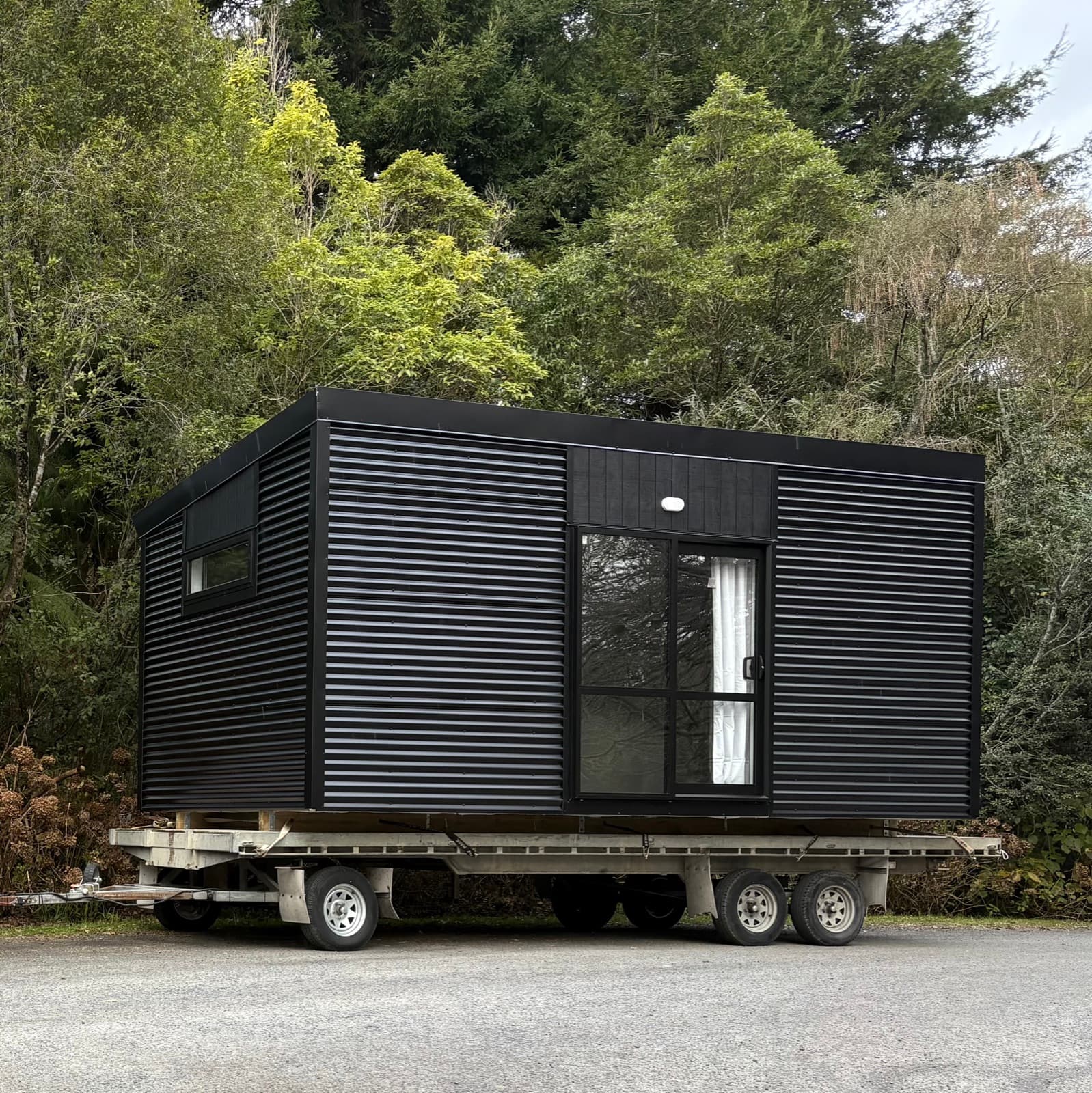
A transportable home is built in a workshop and then loaded onto a truck for delivery to your site. In New Zealand the standard maximum road-legal width for a load is 2.55m, so most transportable homes travel as an overdimension load. Homes up to about 3.1m wide can usually be moved under overdimension rules — with the right signage — without a pilot vehicle. Wider builds, and anything longer than about 20m in total including the truck, need pilot vehicles, permits, and route planning arranged by the transport company.
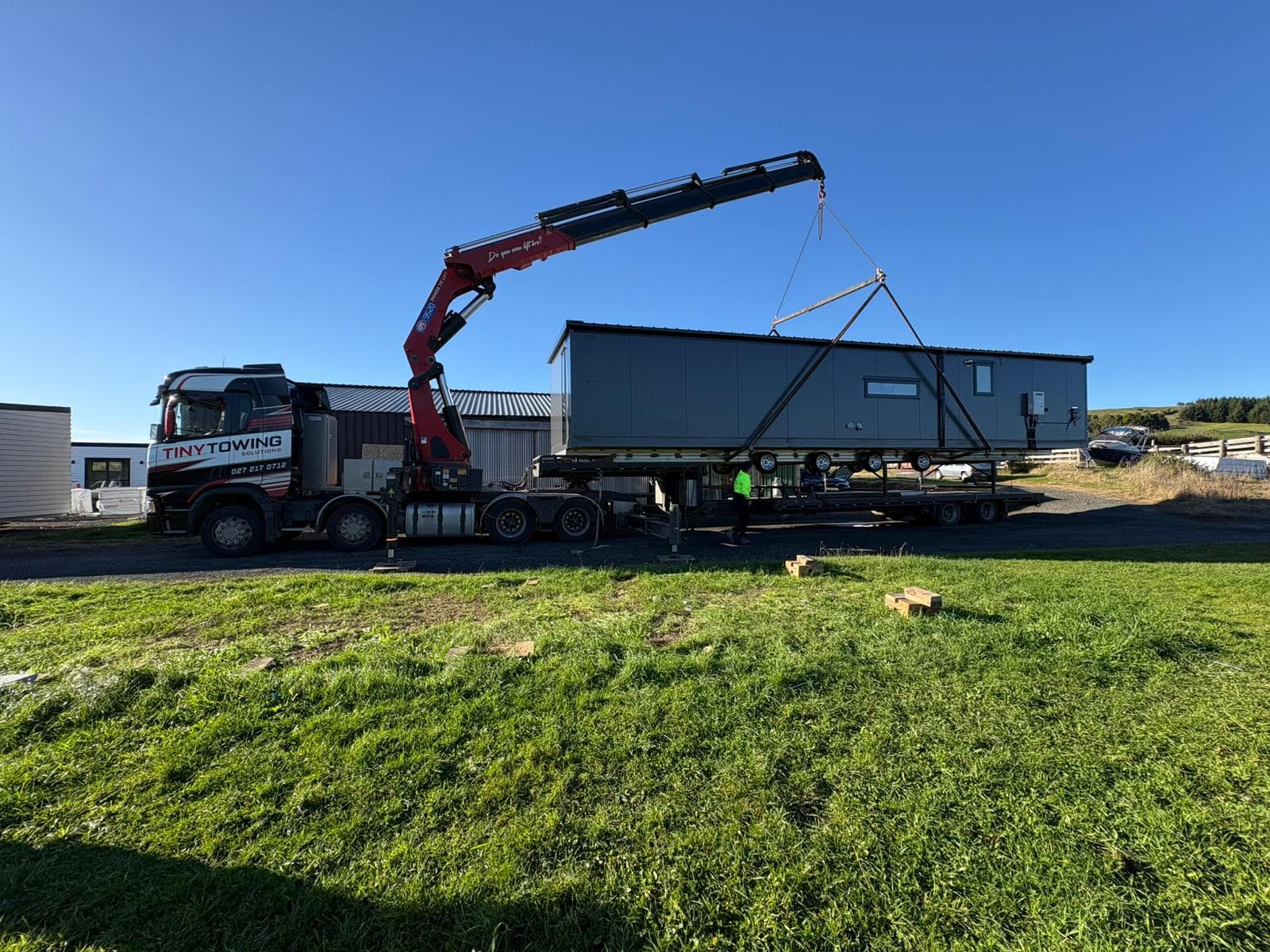
For smaller builds, a standard flatbed or hiab truck can arrive on site, lift the home into position, and be done in a few hours. Larger transportable homes often require a separate crane on site to lift the home into its final position, especially where site access does not allow the truck to reverse into the exact placement spot. This is more logistically involved but well within the capability of any competent transportable home company.
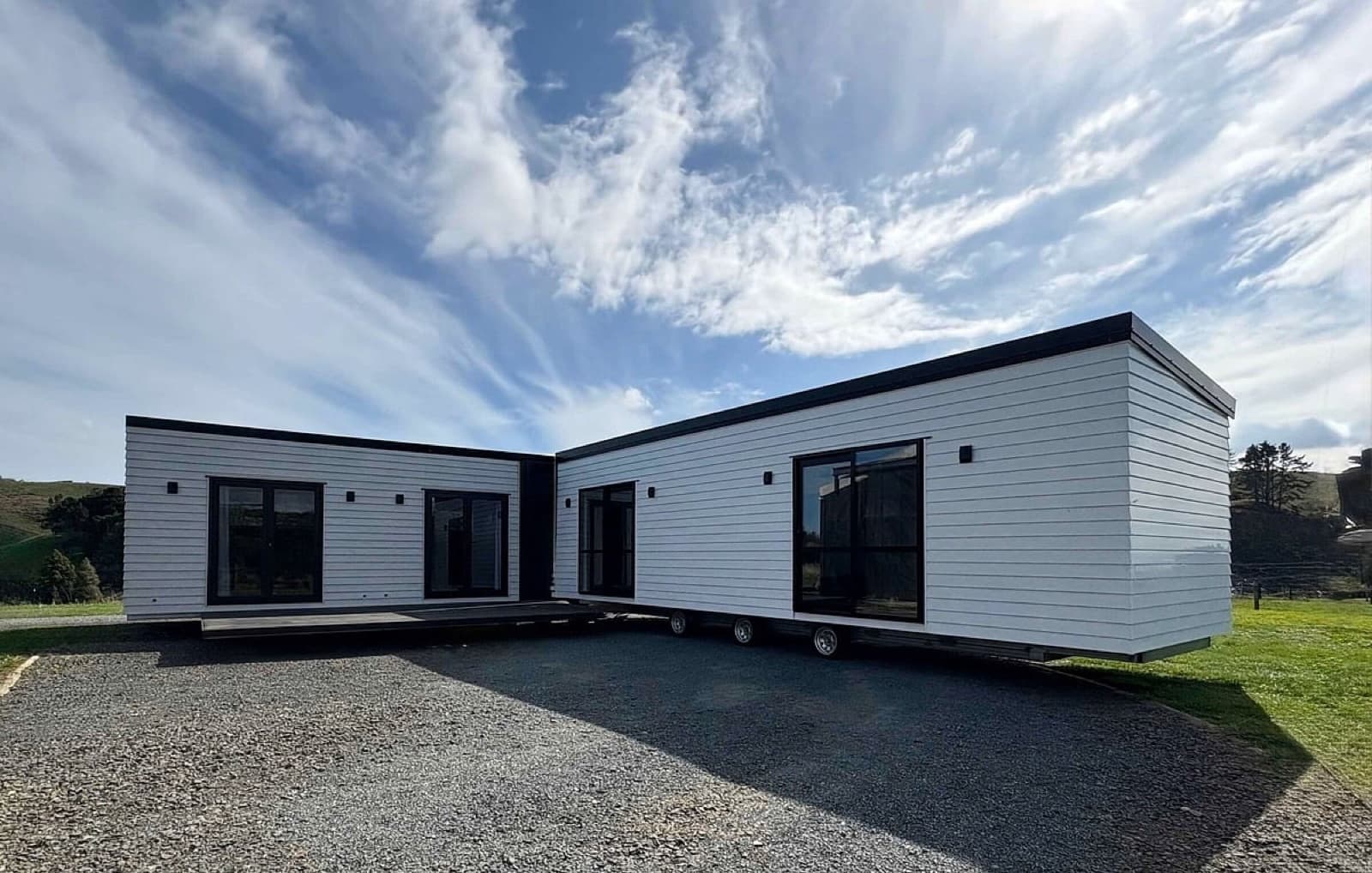
The very largest transportable homes - 16m long, 7m wide, or split-section builds - are delivered in two or more parts and joined together on site. This adds a day or two to the connection process but does not fundamentally change the approach.
Site Access and Route Planning
The single most important thing to check before you order a transportable home is whether the delivery truck can actually reach your site. Narrow driveways, low tree branches, tight corners, and steep grades can all cause problems. For rural sites, farm gates and cattle grids can be issues. For urban or semi-urban sites, powerlines and street parking can complicate the last hundred metres.
The best transportable home companies will do a site visit or virtual survey before you commit. Photos of the driveway, measurements of any tight sections, and satellite images of the approach are all useful. Do not assume it will just work - a truck that cannot reach the site is an expensive problem to solve on delivery day.
Site Preparation
Your site needs to be ready before the home arrives. That means a level pad prepared to the specification your builder provides. For smaller tiny homes this is often a set of concrete piles or driven piles. For larger transportable homes it may be a concrete slab, a piled foundation, or timber bearers on piles.
Services need to be brought to the site edge or under the pad before delivery. That means power connection, water supply, and drainage or septic connection all ready to be joined up once the home lands. A licensed sparky and plumber will handle the final connections after the home is in position.
You also need clear access on the day. That means no parked vehicles, no obstructions along the delivery route, and typically a fenced-off area around the delivery position for safety.
How Delivery Is Priced
Delivery is usually quoted separately from the home rather than being baked into the base price. The cost depends on the size of the home (which drives the truck, permit, and pilot-vehicle requirements), the distance from the workshop to your site, and the complexity of the delivery itself — hiab or separate crane, straightforward or difficult site access, standard route or overdimension permits required.
Ask your builder for a delivery estimate to your specific address before you commit, so you know the true all-in cost of getting the home on the ground. Special delivery scenarios — South Island delivery, complex site access, or unusual routes — should all be quoted upfront so there are no surprises on delivery day.
Permits and Regulations
Transportable homes over specific size limits require oversize load permits from Waka Kotahi (NZTA). The transport company handles the permits as part of the delivery quote, so this is not something you need to arrange yourself. Some routes have restrictions on the time of day large loads can travel, which affects delivery scheduling.
You do not need any special permits for the home to sit on your site once delivered, provided the home itself is NZ Building Code compliant and you have the appropriate building consent for its use as a dwelling.
Delivery Timeline
From order to delivery on a standard tiny home is typically 8 to 12 weeks, depending on the workshop schedule. For a larger transportable home, expect 10 to 14 weeks. The specific delivery date is confirmed once the build is nearing completion and the workshop can commit to a firm schedule.
You need to have your site prepared and services connected before the confirmed delivery date. Trying to rush site prep in the last two weeks before delivery is stressful and often leads to problems. Give yourself a buffer.
What Delivery Day Looks Like
The truck typically arrives in the morning, ideally with good weather. The driver assesses the site and positions the truck for the hiab lift. The home is unstrapped, lifted, and lowered onto the prepared pad. The driver checks that the home is level and in position, secures any tie-downs, and leaves.
For most single-unit deliveries the whole process takes two to four hours. Split-section or larger builds may run into the afternoon or spread across two days. Once the home is in position, your electrician and plumber can begin final connections, and the home is typically fully connected and ready to move into within one to two weeks.
Common Delivery Mistakes to Avoid
The two mistakes buyers make most often are underestimating access requirements and running site prep behind schedule. Get the access right before you order. Get the site prep done at least a week before delivery.
The third mistake is assuming everything will be handled by someone else. Delivery is a coordinated process between your builder, the transport company, your site prep contractor, and your electrician and plumber. A good builder helps you coordinate all of it, but you are still the person on the ground making sure it comes together.
If you have questions about delivery for your specific site, the Smart Housing Solutions team is happy to walk you through it. Get in touch on 021 771 141 or sales@smarthousingsolutions.co.nz.